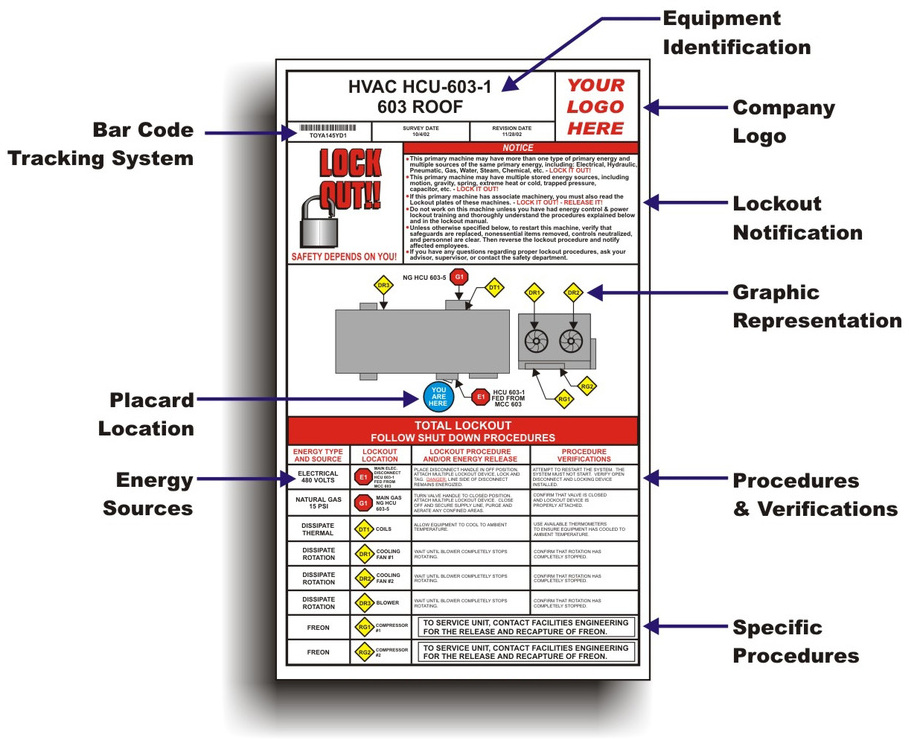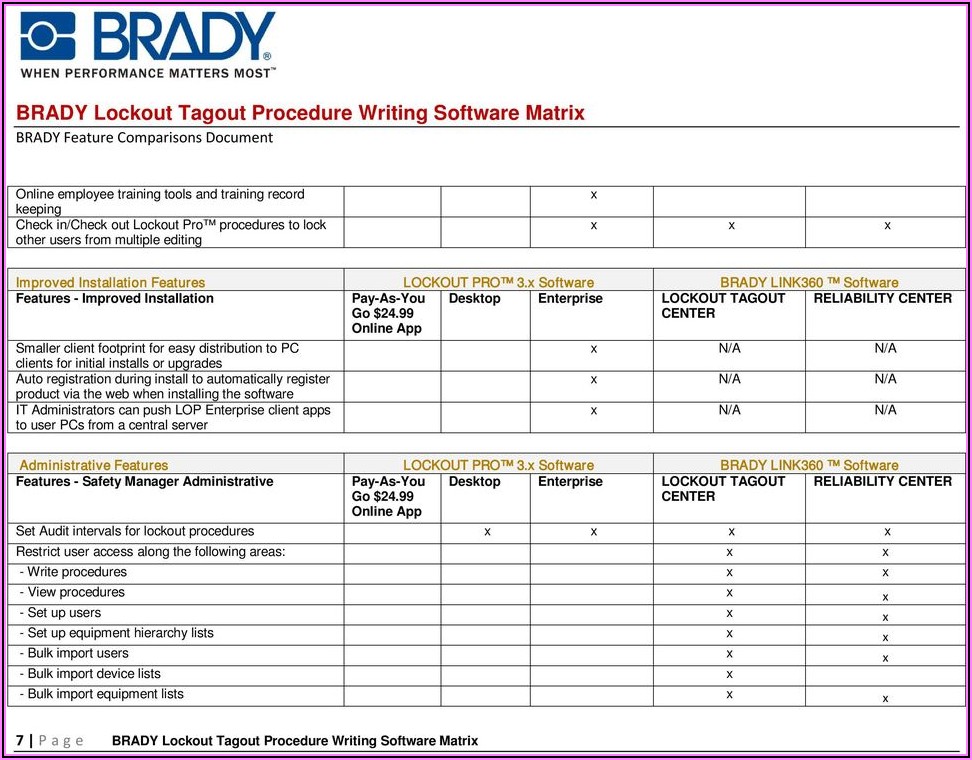
Machines don’t remember. Workers do. But even the sharpest team can miscommunicate during maintenance if procedures aren’t documented. That’s where a printable lockout tagout log sheet becomes more than paperwork—it becomes a legal and operational safeguard.
Without a clear record of when equipment was locked out, who performed the action, and what energy sources were controlled, organizations risk non-compliance with OSHA standards and expose workers to serious injury. A well-designed printable LOTO log sheet standardizes this process—no matter how urgent the repair or how many shifts are involved.
Beyond compliance, these logs are forensic tools. When an incident occurs, investigators turn to documentation first. A missing log, incomplete form, or illegible entry can turn a preventable incident into a citation, fine, or worse.
This is not about bureaucracy. It’s about accountability. And the right printable LOTO log sheet makes that accountability simple, consistent, and enforceable.
What Is a Lockout Tagout Log Sheet (And Why It’s Not Optional)
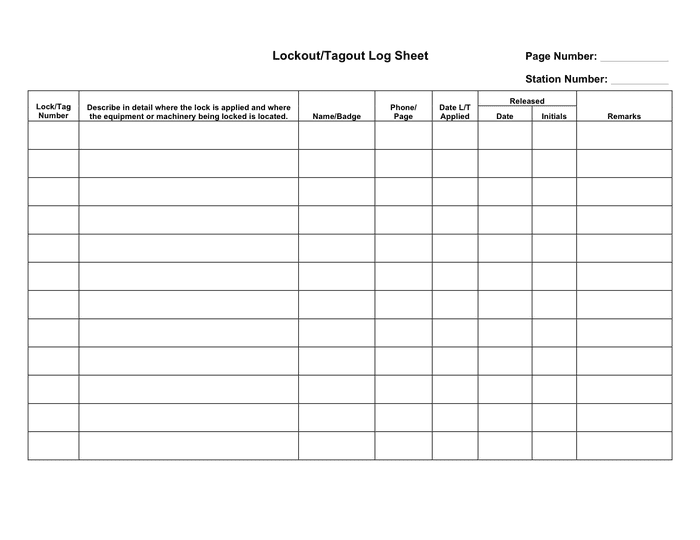
A lockout tagout log sheet is a formal record used during the servicing or maintenance of machinery to document the control of hazardous energy sources. It logs key details such as:
- Equipment name or ID
- Date and time of lockout
- Name and role of authorized employee
- Type of energy isolated (electrical, hydraulic, pneumatic, etc.)
- Lock and tag numbers used
- Reason for maintenance
- Time and signature for re-energization
This isn’t a suggestion. Under OSHA 29 CFR 1910.147, employers must establish an energy control program that includes documentation. While the regulation doesn’t mandate a specific form, it does require a written procedure and verifiable records—exactly what a LOTO log sheet provides.
Printing the log sheet makes it accessible in environments where digital devices are impractical—think noisy shop floors, wet environments, or areas with strict electronic use policies. A physical form ensures that every technician, from apprentice to supervisor, follows the same protocol, every time.
Key Elements of an Effective Printable LOTO Log Sheet
Not all log sheets are created equal. A poorly designed form leads to skipped fields, confusion, or post-incident liability. The best printable lockout tagout log sheets include these non-negotiable components:
1. Clear Header Information Include facility name, department, and work area at the top. This ensures traceability across large operations or multi-site businesses.
2. Equipment Identification A field for equipment name, ID number, and location prevents confusion—especially when multiple machines have similar names or functions.
3. Energy Source Breakdown List common energy sources (electrical, mechanical, chemical, thermal, etc.) with checkboxes. This prompts users to consider all hazards, not just the obvious ones.
4. Lock and Tag Tracking Each lock and tag should have a unique number. The log should record who applied it and where. This is critical during shift changes or group lockouts.
5. Authorization Sign-Offs Dual signature lines—one for lockout initiation, one for re-energization—create a closed-loop process. No re-start without verification.
6. Emergency Override Section Rare, but necessary. A designated area to document any emergency re-energization, including reason and approval, protects the organization legally.
7. Print-Friendly Design Use bold headings, ample white space, and minimal shading. Avoid thin lines or small fonts that fade when photocopied.
A well-structured log sheet doesn’t just collect data—it guides behavior. When technicians fill it out, they’re forced to pause, think, and verify. That pause saves lives.
Common Mistakes That Undermine LOTO Log Effectiveness
Even with a solid form, misuse can nullify its value. Watch for these real-world pitfalls:
- Blank logs left at equipment stations
- A permanently attached log sheet may seem convenient, but it invites errors. Workers might skip entries or assume someone else filled it out. Use temporary placement or a centralized logging station.
- Illegible handwriting
- “John from Maintenance” is not a valid signature. Use print-first policies and require full names and employee IDs.
- Backdating or pre-filling
- This is a compliance red flag. All entries must be made in real time. Supervisors should spot-check logs weekly.
- No audit trail for group lockouts
- In team maintenance, each member must apply their own lock and tag. The log should list every individual—no exceptions.
- Ignoring shift handoffs
- If maintenance spans shifts, the outgoing technician must brief the incoming one, and both must sign the log. Verbal handoffs without documentation violate OSHA’s continuity requirements.
Fixing these issues starts with training—but it’s reinforced by the design of the log itself. A form that’s hard to misuse is worth its weight in compliance gold.
How to Implement a Printable LOTO Log System in 4 Steps
Adopting a log system isn’t just about printing forms. It’s about integration.
Step 1: Customize the Template Use your facility’s branding, equipment codes, and safety language. Align fields with your existing LOTO procedures. For example, if your plant uses color-coded locks, add a column for lock color and meaning.
Step 2: Train All Authorized Employees Don’t assume people know how to use the log. Run hands-on drills where teams complete a mock lockout using the form. Focus on clarity, not speed.
Step 3: Centralize Storage and Access Keep printed logs in waterproof, labeled binders at each production area. Rotate used pages into archived files monthly. Digital backups (scanned copies) are optional but recommended for large facilities.
Step 4: Audit Monthly Assign a safety officer to review 10–20% of completed logs each month. Look for missing signatures, inconsistent times, or skipped energy sources. Use findings to refine training.
One Midwest manufacturing plant reduced LOTO violations by 74% in six months simply by switching to a standardized printable log and enforcing audits. The form didn’t change behavior alone—it made poor behavior visible.
Top 5 Printable LOTO Log Sheet Templates (Free & Customizable)
You don’t need to build from scratch. These proven templates balance compliance and usability:
| Template | Source | Key Features | Best For |
|---|---|---|---|
| OSHA-Compliant LOTO Log | SafetySkills | Pre-filled OSHA references, dual signature lines | High-risk industrial sites |
| Daily LOTO Tracker | Creative Safety Supply | Hourly time blocks, color-coded sections | Facilities with frequent minor maintenance |
| Group Lockout Sheet | Grainger | Team checklist, individual lock tracking | Maintenance crews |
| Universal Equipment Lockout Form | SafetyStore | Multi-energy source grid, barcode-ready | Large operations with diverse machinery |
| Simplified LOTO Log | SafetyMade | Minimal fields, large text, Spanish version | Small shops or non-English speaking teams |
Download one, test it for two weeks, and gather feedback from your maintenance leads. The best template is the one your team actually uses correctly.
Real-World Use Cases: When the Log Sheet Prevented a Disaster

Case 1: Chemical Plant in Texas A technician began re-energizing a mixer without checking the log. His supervisor noticed the “re-energize” box was unsigned. Investigation revealed a night-shift electrician had locked out the motor for rewiring and hadn’t handed off properly. The unsigned log stopped a potential arc flash incident.
Case 2: Automotive Assembly Line During a routine audit, a safety manager spotted duplicate lock numbers on a LOTO log. Tracing it back, they found a worker had reused a lock after a previous job. The facility revised its lock management policy and added a lock inventory log.
Case 3: Food Processing Facility A steam valve was tagged but not logged. When a cleaner opened a panel, residual pressure caused a scald injury. Post-incident, the company mandated that no tag is valid without a corresponding log entry. Compliance rose from 68% to 98% in three months.
These aren’t edge cases. They’re warnings. A printable log sheet isn’t passive—it’s an active layer of defense.
Making Your LOTO Log Sheet Work for You
Don’t treat the log as a compliance checkbox. Use it as a diagnostic tool. Patterns in the data—repeated lockouts on the same machine, frequent overtime maintenance, or recurring energy source oversights—can reveal deeper operational issues.
For example, if a packaging line requires weekly lockouts for jam clearance, that’s not a maintenance issue. It’s a design flaw. The log sheet becomes evidence for capital improvement requests.
Also, involve workers in improving the form. A mechanic might suggest adding a “tool used” field to track calibration or a “parts replaced” line for inventory sync. Bottom-up input increases buy-in and accuracy.
Remember: the goal isn’t just to avoid OSHA fines. It’s to create a culture where safety documentation is as routine as wearing gloves.
Final Thoughts: Print It, Use It, Audit It
A printable lockout tagout log sheet is one of the simplest, most powerful tools in workplace safety. It costs pennies to produce but can prevent millions in liability. It requires no software, no login, no Wi-Fi—just discipline.
Choose a clear, comprehensive template. Train your team. Enforce consistent use. Review logs regularly.
Because when the unexpected happens, the first question won’t be “What went wrong?” It’ll be “What does the log say?” Make sure the answer protects your people and your organization.
Download a trusted template today. Print a stack. Start using it tomorrow. Your safest day starts with a piece of paper.
Frequently Asked Questions
What should be included in a lockout tagout log sheet? A complete log includes equipment ID, date/time of lockout, authorized employee name, energy sources isolated, lock/tag numbers, reason for maintenance, and re-energization signature.
Is a log sheet required by OSHA? OSHA doesn’t mandate a specific log sheet, but it requires documentation of energy control procedures. A LOTO log sheet is the most practical way to meet this requirement.
Can digital logs replace printable ones? Yes, if accessible in the work area and reliable. However, printable logs remain preferred in environments where devices are unsafe or impractical.
Who is responsible for filling out the LOTO log? The authorized employee performing the lockout is responsible for completing and signing the log.
How long should completed LOTO logs be kept? OSHA recommends retaining records for at least one year, though high-risk industries often keep them for three to five years.
Should contractors use the same log sheet? Yes. Contractors must follow your LOTO procedures and use the same documentation to ensure consistency and accountability.
Can one log cover multiple machines? No. Each machine or energy source requires its own lockout procedure and log entry to prevent oversight.
FAQ
What should you look for in Printable Lockout Tagout Log Sheet for Workplace Safety? Focus on relevance, practical value, and how well the solution matches real user intent.
Is Printable Lockout Tagout Log Sheet for Workplace Safety suitable for beginners? That depends on the workflow, but a clear step-by-step approach usually makes it easier to start.
How do you compare options around Printable Lockout Tagout Log Sheet for Workplace Safety? Compare features, trust signals, limitations, pricing, and ease of implementation.
What mistakes should you avoid? Avoid generic choices, weak validation, and decisions based only on marketing claims.
What is the next best step? Shortlist the most relevant options, validate them quickly, and refine from real-world results.